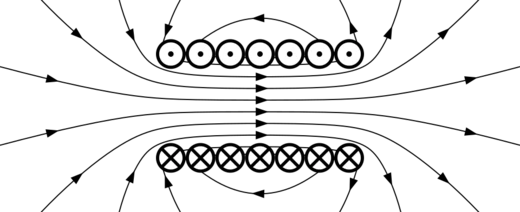
Joule heating
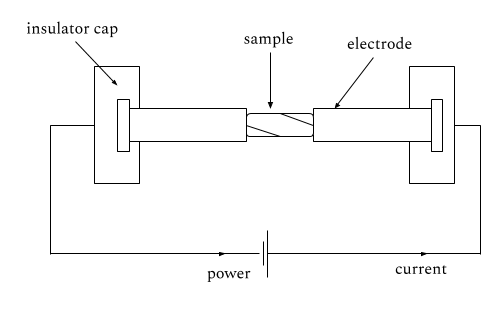
Electric current through a conductor generates heat.

Acosta.eu · CC BY-SA 3.0
Joule heating, also known as resistive heating, resistance heating, or Ohmic heating, is the process by which the passage of an electric current through a conductor produces heat. It is a fundamental physical phenomenon with wide-ranging practical applications, from household appliances to industrial processes.
- field
- Physics, Electrical Engineering
- known_for
- Joule's first law (Joule–Lenz law) stating that heating power equals resistance times the square of the current
- related_scientist
- James Prescott Joule
- related_scientist_2
- Heinrich Lenz
- si_unit
- Joule (J), Watt (W)
Lore & Background
He immersed a length of wire in a fixed mass of water and measured the temperature rise due to a known current flowing through the wire for a 30 minute period. By varying the current and the length of the wire, he deduced that the heat produced was proportional to the square of the current multiplied by the electrical resistance of the immersed wire. The commonly known unit of power, the watt, is equivalent to one joule per second. At the microscopic level, Joule heating is caused by interactions between charge carriers (usually electrons) and the body of the conductor. A potential difference creates an electric field that accelerates charge carriers, giving them kinetic energy; when they collide with the lattice ions (or phonons) in the conductor, energy is transferred from the electrons to the lattice, creating oscillations that are measured as thermal energy.
Reader's Guide
Joule heating is a cornerstone of electrical engineering and physics, directly linking electrical energy to thermal energy. Its significance lies in both its practical utility and its theoretical implications. Practically, it is the basis for countless devices: electric heaters, stoves, ovens, soldering irons, cartridge heaters, electric fuses, electronic cigarettes, and food processing equipment that uses alternating current to heat food uniformly. The phenomenon also explains resistive losses in power transmission, which is why high voltages are used to reduce current and thus minimize heating in cables. The ring circuits in UK homes reduce Joule heating by using two parallel paths to deliver power at lower currents per wire. Notably, Joule heating does not occur in superconducting materials, which have zero electrical resistance. The legacy of Joule's work extends to the fundamental understanding of energy conservation. His experiments helped overturn the caloric theory and established heat as a form of energy, leading to the SI unit of energy being named after him. The relationship between Joule heating and electrical noise (Johnson–Nyquist noise) is explained by the fluctuation-dissipation theorem, showing deep connections between thermodynamics and electrical phenomena. The formulas for Joule heating, both for direct current (P = I²R) and alternating current (using RMS values and power factor), are essential tools for engineers.
Did You Know?
- Joule's first law is known in countries of the former USSR as the Joule–Lenz law.
- Joule heating affects the whole electric conductor, unlike the Peltier effect which transfers heat from one electrical junction to another.
- Electric fuses use Joule heating as a safety device, breaking a circuit by melting if enough current flows.
- Joule heating allows for fast and uniform heating of food products, maintaining quality, and products with particulates heat up faster due to higher resistance.
The Discovery That Dethroned Caloric Theory
James Prescott Joule first presented his findings in December 1840 through an abstract in the Proceedings of the Royal Society, proposing that electric current could generate heat. His experimental setup was deceptively simple: a wire submerged in a measured quantity of water, through which a known current was passed for half an hour. By systematically altering both the current magnitude and the wire's length, he demonstrated that the resulting temperature increase scaled with the square of the current times the wire's resistance. In 1841 and 1842, further experiments revealed that the heat produced was directly proportional to the chemical energy consumed by the voltaic pile powering the circuit. This finding was revolutionary because it allowed Joule to abandon the caloric theory, which had dominated physics at the time, and embrace the mechanical theory of heat—the idea that heat is simply another form of energy. Heinrich Lenz independently arrived at similar conclusions in 1842, and the law now bears both names in former Soviet states. The SI unit of energy, the joule (symbol J), was named in his honor, and the watt represents one joule delivered per second.
From Kitchen Countertops to Industrial Lines
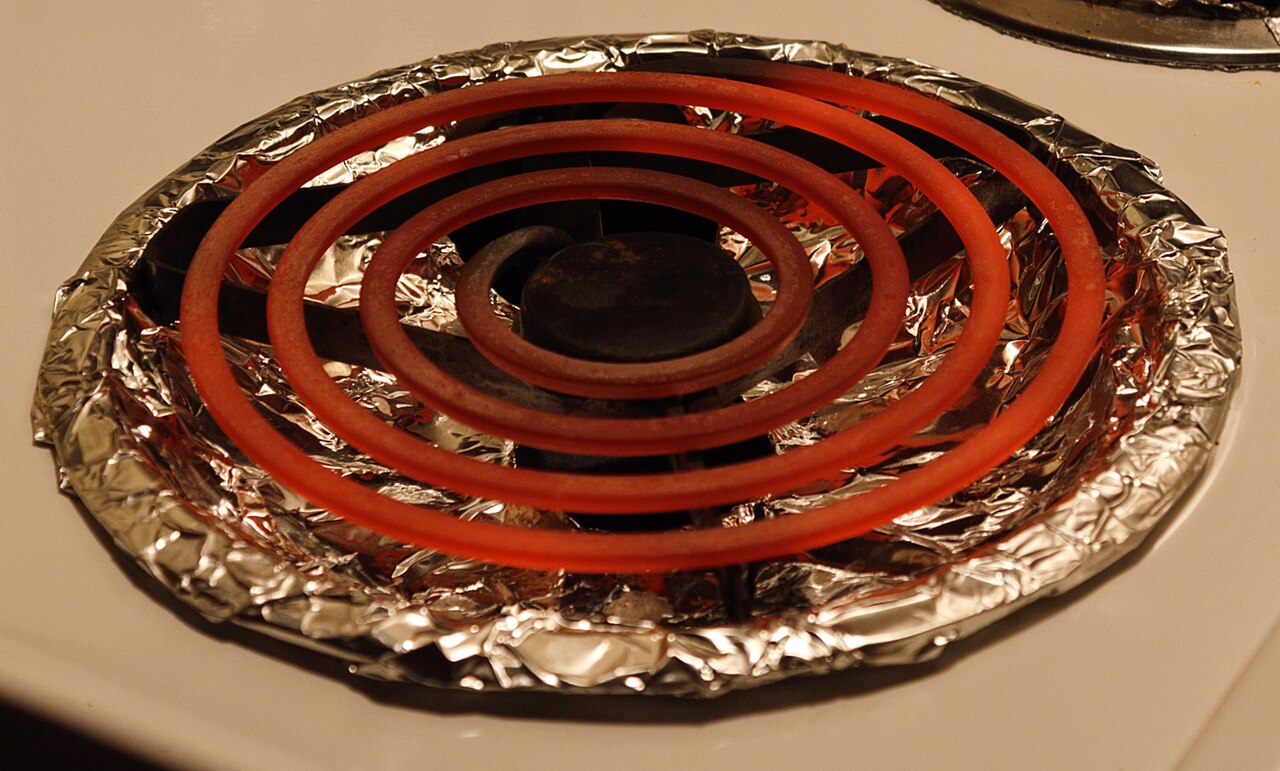
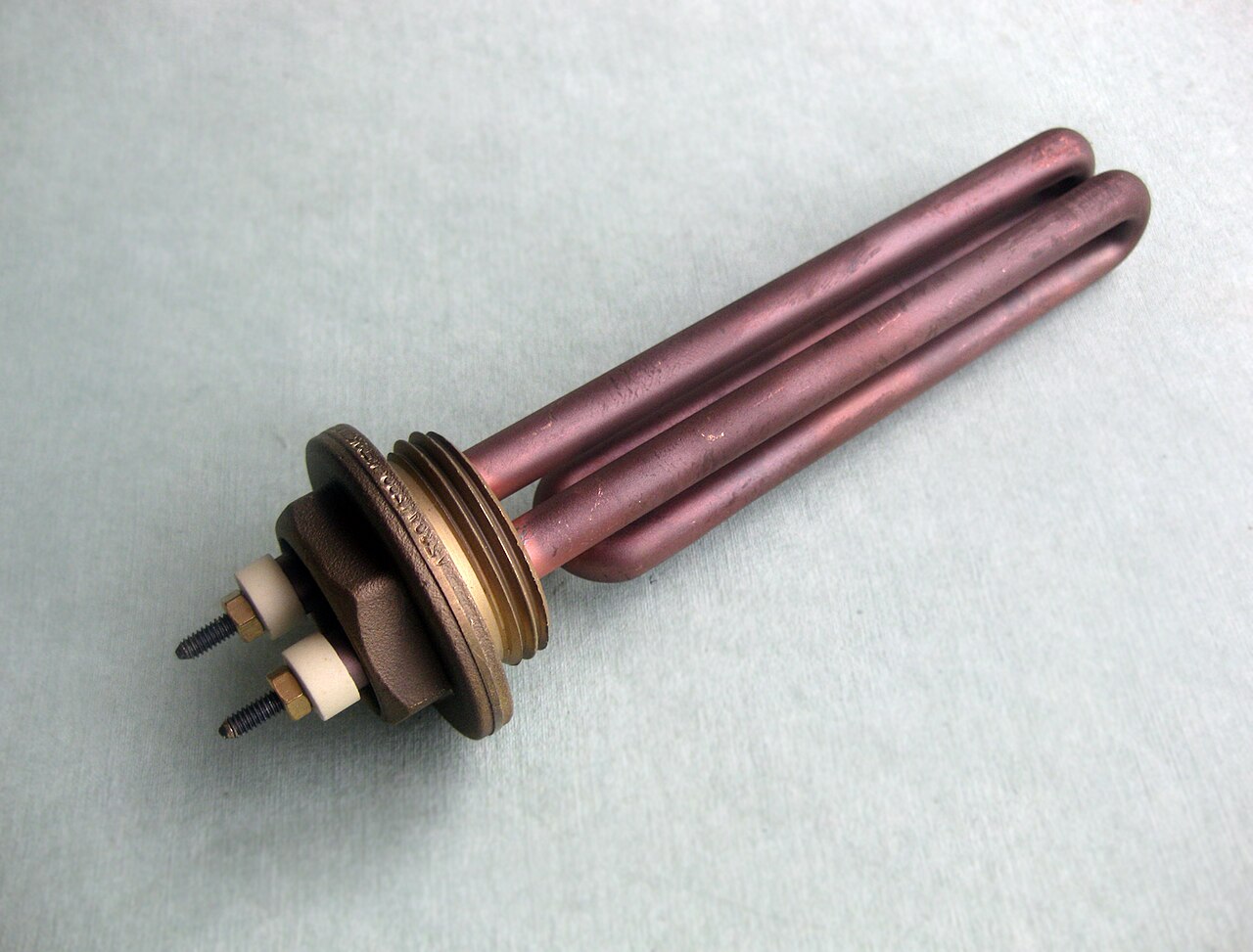
Joule heating is the workhorse behind an astonishing range of everyday and industrial technologies. In homes where grid electricity is accessible, electric heaters warm entire buildings, while stoves and ovens rely on the same principle to cook meals. Soldering irons exploit resistive heating to melt conductive solder and forge reliable electrical connections. In manufacturing, cartridge heaters serve a variety of production processes. Even safety systems depend on the effect: electric fuses are designed to melt and break a circuit when current exceeds safe thresholds. Electronic cigarettes vaporize liquid through a resistive element. In food processing, the principle takes on a unique character—alternating current is driven directly through the food material itself, which behaves as an electrical resistor. The internal resistance of the food generates heat from within, enabling rapid and uniform heating that preserves product quality. Foods containing particulates heat even faster than conventional methods because their higher resistance produces more thermal energy per unit time.
The Microscopic Dance of Electrons and Ions
At the atomic scale, Joule heating emerges from the relentless interaction between mobile charge carriers—typically electrons—and the solid structure of the conductor. When a potential difference exists between two points on a wire, an electric field forms and accelerates the electrons along its direction, endowing them with kinetic energy. These energized electrons do not travel unimpeded; they collide with the quasi-particles of the conductor, specifically the quantized ionic lattice oscillations that describe how atoms vibrate within a crystal. Each collision transfers energy from the electron to the lattice, spawning additional vibrational modes. It is precisely these intensified ion oscillations that manifest as the thermal radiation measured in any standard experiment. The process is inherently distributed throughout the entire conductor, which distinguishes it from the Peltier effect, where heat is shuttled between two distinct electrical junctions rather than generated uniformly along the path.
The Double-Edged Sword of Resistance in Power Systems
In power engineering, Joule heating is both a useful tool and a persistent adversary. Where heating is the goal, the effect is harnessed deliberately. But in transformers, transmission lines, and distribution networks, the same physics produces unwanted resistive losses that waste energy and generate excess heat. This is precisely why high-voltage transmission systems operate at elevated voltages: by reducing the current for a given power level, the I-squared-R losses in cables are dramatically minimized. UK homes employ ring mains, where two parallel paths deliver power to outlets at lower per-wire currents, again curbing resistive heating in the wiring. Superconductors represent the ultimate elimination of this problem, as their zero resistance in the superconducting state means no Joule heating occurs at all. There is also a subtle quantum connection: resistors generate Johnson–Nyquist electrical noise, and the fluctuation-dissipation theorem establishes an intimate mathematical link between this thermal noise and the very Joule heating that dissipates energy in the resistor.
Gallery
Frequently Asked Questions
Who is Joule heating?
Joule heating isn't a person or character; it's a physical phenomenon in which thermal energy is produced whenever electric current passes through a material that has resistance. You'll also encounter it under the names resistive heating, resistance heating, or Ohmic heating.
What are Joule heating's powers and role?
Its defining 'power' is converting electrical energy into heat, quantified by the Joule–Lenz law: heating power equals resistance multiplied by the square of the current. That single relationship drives everything from a toaster's glowing coils to large-scale industrial melting furnaces.
How does Joule heating's story end?
The heat-generation phase stops the instant current ceases to flow, though the conductor still holds whatever thermal energy it accumulated. That stored energy then leaks away into the environment through conduction, convection, and radiation until temperatures equalize.
Why is Joule heating important?
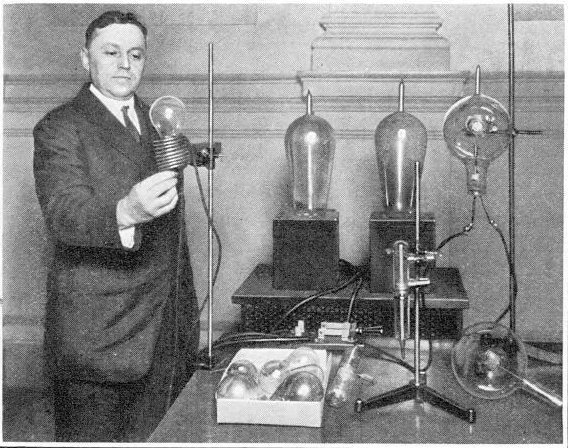
It is the operating principle behind an enormous range of everyday and industrial devices, including light bulbs, electric kettles, space heaters, and arc-welding torches. Without this phenomenon, a large share of household and manufacturing technology simply could not exist.
Who wrote Joule heating's origin story?
The quantitative law behind the effect was worked out independently by James Prescott Joule and Heinrich Lenz in the 1840s, establishing that produced heat is proportional to resistance and the square of current. Their legacy persists in the SI units we still use: the watt for power and the joule for energy.
Elsewhere in the Electricity And Magnetism universe
Spotted an error? Know more?
This is a living reference — every entry is fact-audited, and reader corrections feed straight into our audit queue. Suggest an edit · See this site's audit record