Frequently Asked Questions
The most-asked questions about electricity and magnetism.
What exactly is electricity and magnetism as a field of study?
It is the branch of physics that describes how electric charges, magnetic fields, and electromagnetic waves interact with one another. What were once treated as two separate curiosities are now understood as two faces of a single phenomenon called electromagnetism.
Who are the main figures in this story?
Michael Faraday is the central experimental character, while James Clerk Maxwell is the one who wove all the pieces into a unified mathematical theory. Supporting cast includes Ampère, Gauss, Hertz, Lorentz, and Tesla, each contributing a defining arc.
Where should a newcomer start reading or learning?
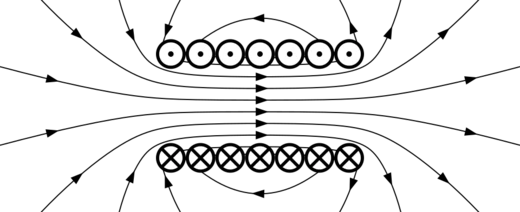
Begin with the core loop: moving charges create magnetic fields, and changing magnetic fields create electric fields. From that single idea, Maxwell's four equations serve as the main plotline you can build outward from.
What are the governing 'rules' everything in the field follows?
Maxwell's equations—four compact statements—dictate how electric and magnetic fields are generated, how they evolve in time, and how they propagate as waves. Paired with the Lorentz force law, they account for essentially every electromagnetic interaction.
What is the big 'reveal' that reshaped the whole narrative?
In the 1860s Maxwell demonstrated that light is itself an electromagnetic wave, meaning the same mathematics that describes a radio signal also describes a photon of visible light. That unification of optics and electromagnetism directly paved the way for Einstein's relativity.
How do electricity and magnetism actually connect to each other?
A steady electric current wraps a magnetic field around the conductor, while a changing magnetic field induces an electric current in a nearby loop. This mutual generation is the operating principle behind generators, transformers, and wireless communication.
What is the 'setting' or stage where all of this unfolds?
The electromagnetic spectrum stretches from ultra-low-frequency radio waves through microwaves, infrared, visible light, ultraviolet, X-rays, and up to gamma rays. Every one of those bands is the same wave phenomenon expressed at a different frequency and energy.
Which moments are considered the most iconic set pieces?
Faraday's 1831 demonstration of electromagnetic induction and Hertz's 1887 laboratory confirmation of propagating electromagnetic waves are the two scenes most often cited as turning points. Tesla's alternating-current motor and the 1911 discovery of superconductivity round out the most celebrated highlights.
Is the field considered 'finished,' or is it still evolving?
The classical framework is essentially complete, but quantum electrodynamics has extended the story to the particle level, and active research into topological insulators, spintronics, and quantum computing keeps adding new chapters. It remains one of the most actively explored areas in all of physics.
Why does this matter beyond the laboratory?
Power grids, smartphones, MRI scanners, satellite links, and nearly every modern device rely on electromagnetic principles at their core. Grasping the field is, in practical terms, understanding the operating system that runs the modern world.